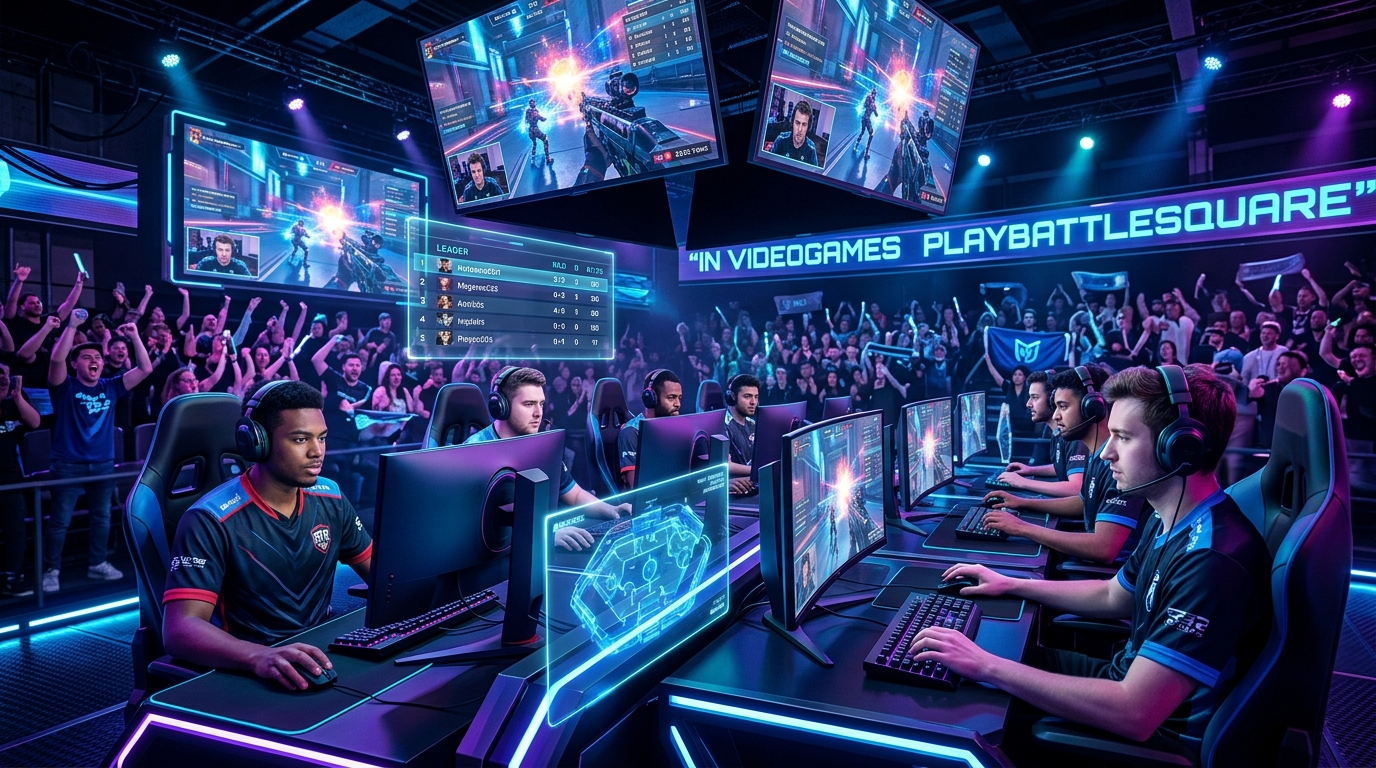
Competitive gaming has evolved far beyond simple entertainment. Modern multiplayer ecosystems now combine social networking, live streaming, strategic progression systems, and esports-style competition into immersive digital experiences that shape how millions of players interact online. Amid this transformation, interest around In VideoGames PlayBattleSquare has grown as gamers search for platforms and concepts that blend tactical gameplay, community engagement, and skill-driven competition into a unified environment.
The popularity of battle-focused gaming platforms reflects larger shifts within the interactive entertainment industry. Players increasingly want experiences that feel dynamic, social, and continuously evolving. Fast matchmaking, ranked systems, customizable gameplay, and cross-platform accessibility are now considered standard expectations rather than premium features. In VideoGames PlayBattleSquare represents the growing fascination with competitive digital arenas where strategy, reflexes, collaboration, and progression intersect in real time.
The Rise of Competitive Multiplayer Ecosystems
Competitive multiplayer gaming has become one of the most influential sectors in the global entertainment industry. From battle royale experiences to tactical shooters and strategic arena games, players now spend countless hours inside persistent online worlds built around competition and progression.
The emergence of platforms associated with In VideoGames PlayBattleSquare reflects this larger industry movement. Modern gamers are no longer satisfied with isolated single-player experiences alone. They seek connected ecosystems where rankings, achievements, social interaction, and live competition create ongoing engagement.
Advancements in internet infrastructure, cloud technology, and gaming hardware have accelerated this shift dramatically. Faster connections and lower latency allow players from different regions to compete seamlessly in real time. Meanwhile, streaming platforms and social media amplify gaming communities by turning gameplay into entertainment content consumed by global audiences.
This evolution has also transformed gaming into a lifestyle industry. Competitive platforms now influence fashion, music, digital culture, sponsorships, and creator economies. The modern multiplayer ecosystem functions not only as a game environment but also as a social and entertainment hub for millions of players worldwide.
Why Tactical Arena Gaming Continues Growing
Arena-based multiplayer formats remain popular because they combine accessibility with strategic depth. Players can quickly join matches while still mastering increasingly complex mechanics over time. This balance between casual accessibility and competitive sophistication has become one of the defining strengths of modern online gaming.
In environments connected to In VideoGames PlayBattleSquare, tactical decision-making often plays a major role in long-term success. Team coordination, positioning, resource management, map awareness, and timing all influence competitive outcomes. These mechanics create layered gameplay experiences capable of supporting both newcomers and highly skilled competitors.
Another major factor behind arena gaming’s success is replayability. Unlike scripted experiences, multiplayer competition creates unpredictable scenarios shaped by human behavior. No two matches unfold identically, which keeps engagement levels high even after hundreds of gameplay hours.
The rise of ranked matchmaking systems has also increased player investment. Competitive progression structures encourage consistent improvement while giving users measurable goals. As gaming audiences increasingly value skill-based achievement, tactical arena formats continue attracting dedicated player communities across multiple age groups and regions.
How Community Features Shape Modern Gaming
Today’s gaming platforms succeed not only because of gameplay mechanics but also because of their social ecosystems. Features like voice chat, guild systems, friend lists, tournaments, and shared progression create stronger emotional connections between players and platforms.
In VideoGames PlayBattleSquare reflects this broader emphasis on community-driven engagement. Modern players want gaming environments where collaboration and communication feel meaningful. Social interaction has become deeply integrated into multiplayer design rather than functioning as a secondary feature.
Streaming culture has strengthened this trend significantly. Players now watch live gameplay, discuss strategies, participate in digital communities, and follow creators who shape competitive trends. Gaming platforms increasingly support this ecosystem by integrating spectator modes, replay systems, and content-sharing tools.
Core Features Driving Multiplayer Engagement
| Feature | Impact on Player Experience |
|---|---|
| Ranked matchmaking | Encourages long-term progression |
| Team communication | Strengthens collaboration |
| Live events | Increases community participation |
| Cross-platform support | Expands player accessibility |
| Seasonal updates | Keeps gameplay fresh |
Community-focused ecosystems help transform gaming from occasional entertainment into a persistent social activity embedded in everyday digital culture.
The Influence of Esports on Platform Design
Esports has dramatically reshaped how developers approach multiplayer game design. Competitive balance, spectator appeal, matchmaking precision, and skill expression are now central priorities in many online gaming environments.
The growing interest surrounding In VideoGames PlayBattleSquare mirrors how competitive gaming culture influences broader player expectations. Even casual audiences increasingly appreciate structured ranking systems, organized tournaments, and professional-level gameplay mechanics.
Esports also encourages continuous platform evolution. Developers regularly introduce balance patches, new maps, gameplay adjustments, and seasonal content to maintain competitive integrity and player engagement. This live-service model has become one of the defining business strategies within modern gaming.
Spectatorship plays an equally important role. Games designed with clear visual readability and exciting competitive pacing often perform better in streaming and tournament environments. This crossover between player experience and viewer entertainment continues shaping the future of multiplayer game development.
Cross-Platform Accessibility Is Reshaping Gaming
Gaming audiences are more diverse than ever before. Players now engage across PCs, consoles, mobile devices, and cloud-based systems. Platforms connected to In VideoGames PlayBattleSquare reflect the growing importance of accessibility and seamless cross-device experiences.
Cross-platform functionality expands player pools while reducing matchmaking limitations. Friends using different hardware ecosystems can compete together more easily, increasing social retention and overall engagement. This interoperability has become a major competitive advantage in modern gaming markets.
Cloud gaming technology is further accelerating these changes. Players increasingly expect instant access without expensive hardware barriers or lengthy installation processes. The ability to transition between devices while maintaining progression is becoming a standard expectation across the industry.
This accessibility expansion also broadens global reach. Emerging gaming markets now contribute significantly to multiplayer ecosystems as mobile connectivity and affordable hardware improve worldwide. Competitive gaming is no longer confined to traditional console or PC audiences alone.
Why Live-Service Models Dominate Multiplayer Gaming
The modern gaming industry increasingly revolves around live-service ecosystems designed for continuous engagement. Rather than releasing static products, developers now maintain evolving platforms with regular content updates, events, and progression systems.
In VideoGames PlayBattleSquare aligns with this broader industry strategy centered on persistent player retention. Seasonal content structures encourage users to return consistently through limited-time rewards, competitive resets, and new gameplay experiences.
This model benefits both players and developers. Gamers receive fresh content that keeps gameplay exciting, while studios maintain active communities and recurring revenue streams. Battle passes, cosmetic customization, and seasonal rankings have become standard features within many competitive platforms.
Popular Live-Service Features
- Seasonal progression systems
- Limited-time gameplay modes
- Cosmetic customization options
- Competitive ranking resets
- Community-driven events
- Frequent gameplay balancing
The success of live-service gaming reflects broader digital entertainment trends where audiences increasingly expect evolving experiences rather than fixed products.
Streaming Culture Changed Multiplayer Expectations
Streaming platforms transformed gaming from a personal hobby into a global spectator phenomenon. Competitive matches, tournaments, tutorials, and creator personalities now attract millions of viewers daily, influencing player behavior and platform popularity.
Interest around In VideoGames PlayBattleSquare reflects this integration between gameplay and digital entertainment culture. Many players now choose games not only based on mechanics but also on community visibility, creator engagement, and streaming appeal.
Streaming culture encourages highly social gaming ecosystems. Features like spectator modes, replay sharing, in-game events, and integrated broadcasting tools support content creation while increasing community interaction. This visibility also accelerates trend cycles within gaming communities.
Professional players and influencers increasingly shape gameplay strategies, weapon preferences, and competitive metas. As a result, multiplayer ecosystems evolve rapidly through constant communication between developers, creators, and audiences.
The relationship between gaming and streaming has become so interconnected that many modern multiplayer titles are designed specifically with spectator engagement in mind from the beginning.
Competitive Ranking Systems Drive Player Retention
One of the strongest engagement mechanisms in multiplayer gaming is competitive ranking progression. Ranked ladders create measurable goals that motivate players to improve skills, refine strategies, and continue participating over long periods.
In ecosystems associated with In VideoGames PlayBattleSquare, progression systems likely contribute significantly to ongoing engagement. Competitive structures tap into achievement psychology by rewarding consistency, improvement, and mastery.
Players often form strong emotional connections to ranking systems because they provide visible recognition of effort and skill development. Seasonal resets, leaderboard placements, and achievement rewards create recurring motivations for continued participation.
Common Competitive Ranking Structures
| Rank System Element | Purpose |
|---|---|
| Skill-based matchmaking | Balanced competition |
| Tier progression | Visible achievement tracking |
| Seasonal rewards | Incentivized participation |
| Leaderboards | Community recognition |
| Placement matches | Accurate ranking calibration |
These systems help sustain long-term engagement while creating dynamic competitive ecosystems capable of supporting both casual and elite players.
The Role of Customization in Player Identity
Modern multiplayer games increasingly emphasize personalization. Cosmetic customization allows players to express individuality through skins, avatars, emotes, banners, and digital collectibles. This trend reflects the growing importance of identity within online gaming culture.
In VideoGames PlayBattleSquare represents the broader evolution of gaming spaces into digital social environments where visual identity matters almost as much as gameplay performance. Players often invest heavily in customization because it strengthens emotional attachment to accounts and communities.
Customization systems also contribute significantly to monetization strategies within live-service ecosystems. Cosmetic purchases provide revenue streams without directly impacting competitive balance, making them highly attractive for developers.
The rise of virtual identity culture extends beyond gaming itself. Digital fashion, branded collaborations, and creator-inspired cosmetics increasingly connect gaming ecosystems with entertainment, music, and lifestyle industries. Multiplayer platforms now function as broader cultural spaces rather than isolated gaming products.
Artificial Intelligence Is Transforming Multiplayer Experiences
Artificial intelligence is becoming increasingly influential across multiplayer gaming ecosystems. AI-driven matchmaking, moderation systems, anti-cheat technologies, and adaptive gameplay balancing all shape modern player experiences.
Platforms associated with In VideoGames PlayBattleSquare likely benefit from these broader technological advancements. Sophisticated matchmaking algorithms improve competitive fairness by pairing players with similar skill levels, creating more satisfying gameplay sessions.
AI moderation tools also help manage toxic behavior, spam, and cheating more efficiently than traditional manual systems alone. Maintaining healthy communities has become a major operational priority as multiplayer platforms scale globally.
Machine learning additionally supports gameplay analytics and balance optimization. Developers increasingly analyze enormous datasets to identify dominant strategies, exploitative mechanics, and player behavior trends. This data-driven approach helps maintain competitive integrity while supporting long-term ecosystem health.
As AI capabilities expand, multiplayer gaming experiences will likely become increasingly personalized, responsive, and dynamically balanced.
Mobile Gaming Expanded Competitive Audiences
Mobile gaming fundamentally changed the scale of the global gaming industry. Smartphones introduced competitive multiplayer experiences to billions of users worldwide, dramatically expanding gaming demographics and accessibility.
Interest in In VideoGames PlayBattleSquare reflects how modern gaming ecosystems increasingly prioritize flexibility and accessibility across devices. Mobile integration allows players to engage with communities, progression systems, and gameplay sessions from virtually anywhere.
The quality gap between mobile and traditional gaming platforms has also narrowed considerably. High-performance devices, improved touchscreen optimization, and cloud gaming support now allow sophisticated multiplayer experiences on portable hardware.
Mobile gaming’s growth also accelerated esports expansion in regions where consoles and gaming PCs remain less accessible. Competitive gaming communities now thrive across multiple platforms, creating more diverse and globally connected ecosystems than ever before.
Why Social Competition Appeals to Modern Players
Gaming has become deeply social. Many players now value interaction, collaboration, and shared experiences as highly as gameplay mechanics themselves. Multiplayer competition creates emotional intensity and unpredictability that static entertainment formats often struggle to replicate.
In VideoGames PlayBattleSquare reflects this broader cultural shift toward interactive social entertainment. Team victories, close matches, strategic coordination, and community participation generate memorable experiences that strengthen long-term engagement.
Social competition also creates powerful retention dynamics. Friend groups, clans, guilds, and regular teammates encourage consistent participation because gaming becomes tied to ongoing social relationships. This network effect significantly influences platform longevity.
The psychological appeal of competition remains another major factor. Ranked progression, strategic mastery, and skill recognition provide meaningful achievement structures that motivate players to continue improving over time.
Security and Fair Play Are Critical Challenges
As multiplayer gaming ecosystems grow larger and more competitive, maintaining fairness becomes increasingly complex. Cheating, account theft, harassment, and exploit abuse can significantly damage player trust and long-term community health.
Platforms connected to In VideoGames PlayBattleSquare operate within an industry increasingly focused on advanced security systems and integrity protection. Anti-cheat technologies, behavioral monitoring, account verification, and moderation systems now play essential operational roles.
Fair matchmaking is especially important in competitive ecosystems. Players expect balanced games where outcomes depend primarily on skill rather than unfair advantages or manipulation. Maintaining this trust is central to sustaining active player communities.
Developers also face growing pressure to improve transparency around moderation and competitive enforcement policies. Healthy multiplayer ecosystems depend heavily on player confidence that rules are applied consistently and fairly across the community.
Virtual Economies Are Reshaping Gaming Business Models
Modern multiplayer platforms increasingly operate sophisticated digital economies involving cosmetics, battle passes, premium content, and virtual rewards. These systems significantly influence player behavior and long-term engagement strategies.
In VideoGames PlayBattleSquare reflects the broader integration of monetization and progression within live-service ecosystems. Cosmetic ownership, exclusive rewards, and seasonal unlockables create additional layers of player investment beyond gameplay alone.
Virtual economies also support creator collaborations, esports partnerships, and branded events. Gaming ecosystems increasingly overlap with entertainment industries through digital merchandise and promotional experiences.
Importantly, successful monetization models typically avoid direct pay-to-win mechanics that compromise competitive balance. Players generally respond more positively to cosmetic-driven systems that preserve fairness while allowing personalization and optional spending.
The Future of Multiplayer Gaming Platforms
The future of multiplayer ecosystems will likely involve deeper integration between artificial intelligence, cloud infrastructure, virtual identity systems, and immersive social experiences. Gaming platforms are evolving into comprehensive entertainment environments rather than standalone software products.
In VideoGames PlayBattleSquare represents broader trends toward interconnected digital communities where competition, social interaction, and content creation coexist seamlessly. Future platforms may incorporate even more advanced personalization, real-time procedural content, and AI-driven gameplay assistance.
Virtual reality and augmented reality technologies could further expand multiplayer immersion in coming years. Although adoption remains gradual, developers continue experimenting with new forms of interactive competition and social engagement.
Cross-media integration will likely grow as well. Gaming ecosystems increasingly intersect with music events, film promotions, creator economies, and digital fashion collaborations. Multiplayer platforms are becoming central hubs within broader digital culture.
Conclusion
In VideoGames PlayBattleSquare reflects the rapid evolution of modern multiplayer gaming into a sophisticated blend of competition, community, technology, and entertainment. Today’s gaming ecosystems are no longer limited to isolated gameplay sessions. They function as dynamic social spaces where players connect, compete, create content, and build long-term digital identities.
The growth of tactical multiplayer experiences, live-service models, esports integration, and cross-platform accessibility demonstrates how deeply gaming has embedded itself into global digital culture. Competitive ecosystems thrive because they combine strategic depth with constant social interaction and evolving content.
As technology advances, multiplayer platforms will continue becoming more immersive, intelligent, and interconnected. Artificial intelligence, cloud gaming, virtual economies, and creator-driven communities are already reshaping player expectations at remarkable speed.
The broader significance of In VideoGames PlayBattleSquare lies in how it reflects gaming’s transformation into one of the world’s most influential entertainment industries. Competitive multiplayer experiences now influence culture, technology, media, and social interaction on a truly global scale.
Frequently Asked Questions
What does In VideoGames PlayBattleSquare refer to?
The phrase is commonly associated with competitive multiplayer gaming environments focused on tactical gameplay, online battles, community interaction, and progression systems.
Why are multiplayer battle platforms so popular?
They combine social interaction, strategic depth, replayability, and competitive progression, creating highly engaging long-term gaming experiences.
How important is esports to modern gaming platforms?
Esports significantly influences game design, balance systems, streaming visibility, and player expectations around competitive gameplay.
What role does cross-platform support play in gaming?
Cross-platform functionality allows players on different devices to compete together, improving accessibility and strengthening gaming communities.
Why do live-service models dominate multiplayer gaming?
They keep players engaged through regular updates, seasonal content, competitive resets, and evolving gameplay experiences.
How do ranking systems improve player retention?
Competitive rankings provide measurable goals, achievement recognition, and ongoing motivation for skill development and participation.
What technologies are shaping the future of multiplayer gaming?
Artificial intelligence, cloud gaming, advanced matchmaking systems, virtual economies, and immersive social features are driving future innovation.
Why is customization important in modern games?
Customization strengthens player identity, emotional investment, and community engagement while supporting cosmetic-driven monetization systems.