
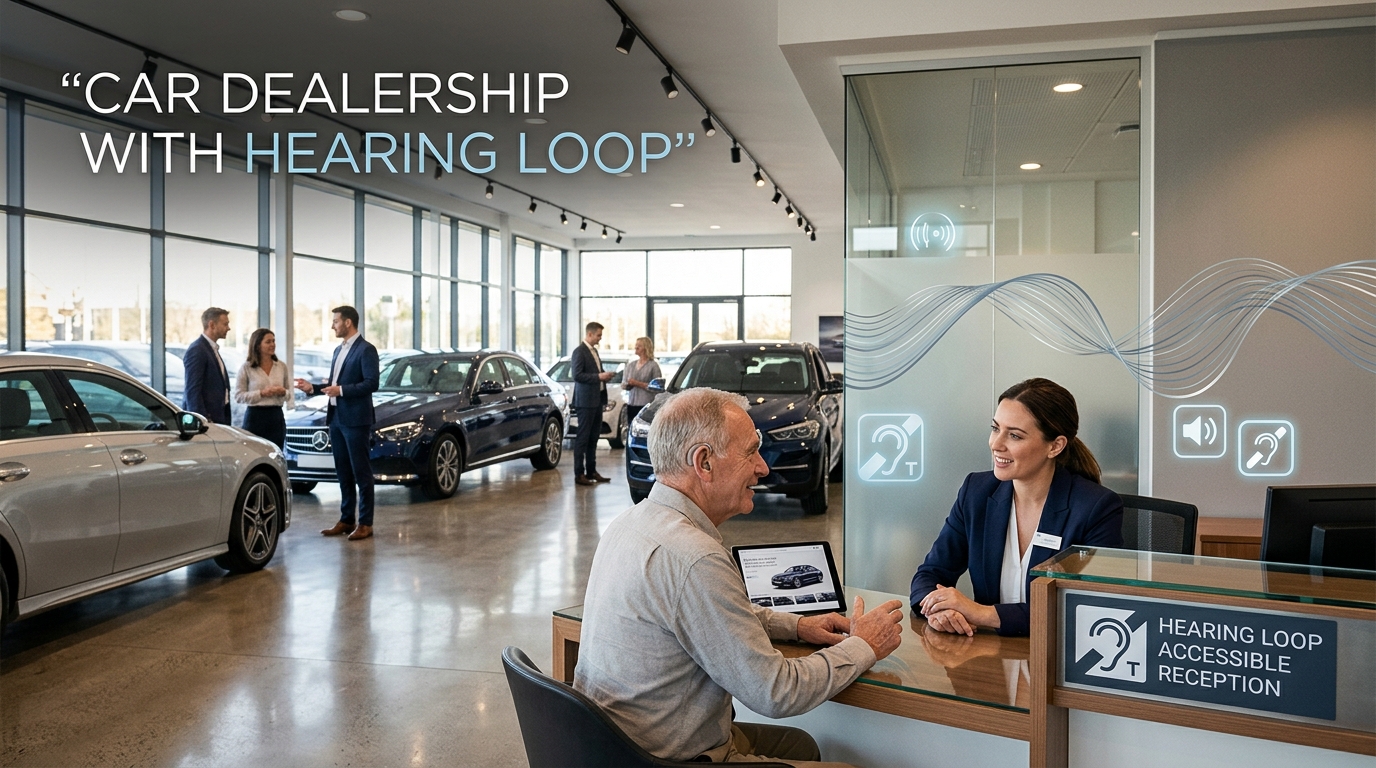
Walking into a modern car showroom should feel exciting, informative, and welcoming. Yet for millions of people with hearing loss, dealership environments can quickly become frustrating. Loud HVAC systems, echo-heavy showrooms, crowded waiting areas, background music, and fast-paced sales conversations often make communication difficult. That challenge is driving growing interest in the concept of a Car Dealership With Hearing Loop technology, where accessibility and customer experience intersect in a highly practical way.
Hearing loop systems are no longer viewed as niche accessibility upgrades reserved only for theaters, hospitals, or government buildings. Automotive retailers are increasingly recognizing that inclusive communication technology improves customer satisfaction, supports compliance goals, strengthens brand reputation, and creates a more comfortable environment for both buyers and employees. In an industry where trust and clarity are essential during major financial decisions, hearing loop systems are becoming an important part of customer-centered dealership design.
Understanding How Hearing Loop Technology Works
A hearing loop, often called an induction loop system, is an assistive listening technology designed to transmit sound directly into compatible hearing aids and cochlear implants equipped with telecoils. The system works by creating a magnetic signal that users can receive clearly through their hearing devices without background noise interference.
In a dealership setting, the technology usually includes a microphone, amplifier, and loop wire installed around a sales desk, service counter, waiting area, or conference space. When activated, speech from dealership staff is transmitted directly into the hearing aid, dramatically improving clarity for the listener. This eliminates much of the ambient noise that commonly interferes with conversations in busy retail environments.
Unlike handheld assistive listening devices that require borrowing separate equipment, hearing loops work seamlessly with compatible hearing aids already owned by customers. This convenience makes them especially attractive in hospitality and customer-service industries where smooth communication is essential. Car dealerships increasingly view hearing loop systems as both an accessibility solution and a customer experience enhancement.
Why Accessibility Matters in Automotive Retail
Buying a vehicle involves complex communication. Customers discuss financing terms, warranty details, insurance options, service agreements, vehicle features, and safety technologies. Missing critical information due to poor hearing conditions can create confusion and reduce confidence in the purchasing process.
Automotive dealerships operate in highly competitive markets where customer experience significantly influences brand perception and long-term loyalty. Accessibility improvements are no longer treated merely as compliance obligations. They are becoming strategic business investments that help dealerships serve broader audiences more effectively.
Hearing accessibility is especially important because hearing loss affects a large and growing segment of the population, particularly older adults who also represent major vehicle-buying demographics. Many consumers may not openly disclose hearing difficulties, meaning dealerships that proactively improve communication can create more comfortable experiences without requiring customers to request special accommodations.
Inclusive environments also benefit dealership employees. Staff members with hearing challenges can communicate more effectively during customer interactions, training sessions, and internal meetings. This broader accessibility culture supports stronger workplace inclusion and operational efficiency.
How Hearing Loops Improve the Customer Experience
A Car Dealership With Hearing Loop technology often delivers immediate improvements in customer comfort and communication quality. Traditional dealership environments contain constant competing sounds, including conversations, ringing phones, showroom music, and mechanical activity from nearby service bays. These distractions can make speech comprehension difficult even for people with mild hearing loss.
Hearing loop systems reduce listening fatigue by transmitting speech directly into compatible hearing devices. Customers no longer need to strain to understand financing details or repeatedly ask staff to repeat information. This smoother communication experience can significantly reduce stress during major purchasing decisions.
Improved communication also helps build trust. Vehicle purchases involve significant financial commitments, and buyers want confidence that they fully understand pricing, warranties, service terms, and technology explanations. Clearer conversations help customers feel respected and informed throughout the process.
Benefits of Hearing Loops in Dealerships
| Benefit | Customer Impact |
|---|---|
| Clearer speech transmission | Better understanding of discussions |
| Reduced background noise | Less listening fatigue |
| Improved accessibility | Greater comfort and inclusion |
| Enhanced customer confidence | Stronger purchasing trust |
| Better service interactions | Improved satisfaction levels |
Dealerships investing in accessibility technology often discover that communication improvements positively influence overall customer perception beyond the hearing-impaired community itself.
The Growing Business Case for Inclusive Showrooms
Accessibility initiatives increasingly align with broader business goals in the automotive sector. Modern consumers often evaluate companies based not only on products and pricing but also on inclusivity, customer care, and social responsibility. Hearing loop technology helps dealerships demonstrate tangible commitment to accessible service.
Inclusive design also supports demographic realities. Aging populations in many countries mean hearing loss prevalence continues rising steadily. Automotive brands targeting mature buyers benefit significantly from environments that accommodate hearing challenges without stigmatizing customers.
From a business perspective, clearer communication can also reduce misunderstandings related to financing terms, maintenance recommendations, or service agreements. Better information transfer improves transaction accuracy and customer satisfaction while potentially reducing disputes or confusion after purchase.
Many dealership groups now incorporate accessibility planning into broader showroom modernization projects. As digital retailing, luxury hospitality concepts, and customer-experience design become more important in automotive retail, hearing accessibility technology fits naturally into those evolving strategies.
Hearing Loops and Modern Dealership Architecture
Contemporary dealership architecture increasingly emphasizes open layouts, glass walls, high ceilings, and large communal spaces. While visually appealing, these design choices often create acoustical challenges. Echoes and ambient noise can make speech comprehension significantly more difficult, especially for hearing aid users.
Hearing loop systems provide a practical solution without requiring major structural redesigns. Loops can be installed discreetly within floors, ceilings, counters, or seating areas while preserving the dealership’s aesthetic appeal. This flexibility makes the technology attractive for both new construction projects and retrofitting older facilities.
Luxury dealerships in particular are increasingly focused on sensory comfort. Acoustic management, lighting quality, seating arrangements, and accessibility features now play larger roles in showroom design than in previous decades. Hearing loop systems fit naturally within this hospitality-inspired retail philosophy.
The automotive industry’s shift toward premium customer experiences has also increased attention on personalized communication. Clear conversations about advanced driver assistance systems, electric vehicle charging, and digital interfaces are becoming more important as vehicles grow technologically complex.
The Connection Between Hearing Accessibility and Trust
Trust is central to automotive retail. Customers making major financial decisions need confidence that they fully understand the details being discussed. Miscommunication during financing conversations or service explanations can create frustration and damage dealership relationships.
Hearing loop technology helps reduce communication barriers that may otherwise undermine trust. Customers who clearly hear discussions about pricing, warranty coverage, maintenance plans, and trade-in evaluations are more likely to feel comfortable throughout the process.
The emotional aspect is equally important. Struggling to hear conversations in public settings can feel isolating or embarrassing for many individuals with hearing loss. Dealerships that proactively support accessible communication create more respectful and welcoming environments.
This emphasis on trust extends into after-sales service as well. Service departments frequently involve technical explanations, scheduling discussions, and maintenance recommendations. Clear communication during those interactions helps strengthen long-term customer retention and loyalty.
Customer Situations Improved by Hearing Loops
- Financing discussions
- Vehicle feature demonstrations
- Service department consultations
- Warranty explanations
- Test-drive briefings
- Customer waiting areas
As dealerships increasingly compete on experience rather than price alone, communication quality becomes a major differentiator.
Hearing Loops Support an Aging Automotive Audience
The global population is aging, and older adults remain one of the automotive industry’s most influential customer groups. Many mature buyers prioritize comfort, reliability, technology support, and dealership service quality when choosing where to purchase vehicles.
Hearing loss prevalence rises significantly with age, making hearing accessibility increasingly relevant for automotive retailers. Many customers with mild or moderate hearing difficulties may not identify themselves as needing accommodation, yet still struggle in noisy dealership environments.
Providing hearing loop systems allows dealerships to support these customers discreetly and respectfully. Users simply activate the telecoil setting in their hearing aids and receive clearer audio directly without requiring special attention or separate devices.
Automotive brands that cater successfully to mature demographics often focus heavily on relationship-building and personalized service. Accessible communication technology complements those priorities by ensuring conversations remain comfortable and understandable throughout the ownership journey.
The connection between accessibility and customer retention is especially strong in service departments, where repeat interactions shape long-term loyalty. Hearing-friendly environments encourage customers to return confidently for maintenance and support.
Service Departments Benefit From Better Audio Clarity
Showrooms receive much of the attention in dealership design discussions, but service departments may benefit even more from hearing loop systems. Service counters are often among the loudest areas in automotive facilities due to nearby equipment, phone conversations, and customer traffic.
Clear communication is essential when discussing repairs, maintenance timelines, pricing estimates, and vehicle diagnostics. Hearing loops help ensure customers fully understand service recommendations without confusion caused by background noise.
Technicians and service advisors also benefit from more efficient conversations. Fewer misunderstandings reduce the likelihood of incorrect approvals, scheduling errors, or missed maintenance information. This operational clarity can improve workflow efficiency and customer satisfaction simultaneously.
Areas Where Hearing Loops Are Commonly Installed
| Dealership Area | Purpose |
|---|---|
| Sales desks | Clear financing and pricing discussions |
| Reception areas | Improved greetings and check-ins |
| Service counters | Better maintenance communication |
| Waiting lounges | Public announcement accessibility |
| Conference rooms | Staff training and customer presentations |
As dealerships modernize service experiences with digital scheduling and customer hospitality upgrades, hearing accessibility technology increasingly becomes part of broader operational improvements.
Legal and Compliance Considerations Matter
Accessibility regulations vary across countries and regions, but many public-facing businesses must provide reasonable accommodations for individuals with disabilities. Hearing loop systems can help dealerships meet or exceed accessibility expectations while improving customer service quality.
In many jurisdictions, assistive listening systems are already common in theaters, airports, government buildings, and conference centers. Automotive dealerships increasingly recognize that adopting similar technologies proactively demonstrates leadership rather than simple compliance.
Beyond legal considerations, accessibility investments often support corporate social responsibility goals. Automotive groups seeking to strengthen diversity, equity, and inclusion initiatives frequently include physical accessibility improvements within broader strategic planning.
Importantly, hearing loop systems are widely viewed as one of the most user-friendly assistive listening technologies available because they integrate directly with hearing aids. This ease of use makes them especially attractive compared with more complicated alternatives requiring separate receivers or setup procedures.
The Rise of Universal Design in Retail Spaces
Universal design principles focus on creating environments usable by as many people as possible without requiring specialized adaptation. Hearing loop systems align closely with this philosophy because they improve communication accessibility seamlessly within mainstream customer experiences.
Retail industries increasingly embrace universal design as both a practical and competitive advantage. Consumers value businesses that feel comfortable, intuitive, and welcoming to diverse populations. Automotive dealerships are gradually applying these concepts to showrooms, lounges, digital interfaces, and customer communication systems.
Hearing accessibility also overlaps with broader sensory design considerations. Acoustic treatment, lighting balance, seating comfort, and wayfinding all contribute to a more inclusive retail environment. Dealerships investing holistically in accessibility often discover benefits extending far beyond compliance alone.
The luxury automotive market especially emphasizes effortless customer experiences. Hearing loop systems support that premium positioning by reducing friction during critical conversations and enhancing overall communication quality.
Electric Vehicle Education Makes Communication Even More Important
The rise of electric vehicles has increased the complexity of dealership conversations. Customers now discuss charging infrastructure, battery warranties, regenerative braking, software updates, driver assistance technologies, and home charging installation alongside traditional automotive topics.
These discussions require clear communication and detailed explanations. Hearing difficulties can make it harder for customers to absorb technical information accurately, especially in noisy environments. Hearing loop systems help ensure buyers understand the increasingly sophisticated technology integrated into modern vehicles.
Electric vehicle adoption also attracts many older buyers seeking quieter driving experiences and lower maintenance requirements. Since hearing loss prevalence is higher among mature demographics, accessibility improvements become even more relevant in EV-focused retail environments.
Dealerships that effectively communicate advanced vehicle technologies often achieve stronger customer confidence and satisfaction. Hearing-friendly communication systems support that educational process while helping reduce confusion around rapidly evolving automotive innovation.
Employee Inclusion Is Becoming a Higher Priority
Accessibility technology benefits not only customers but also dealership staff. Employees with hearing challenges may struggle during meetings, customer interactions, phone discussions, or training sessions conducted in acoustically difficult environments.
Hearing loops installed in conference rooms, service counters, or customer consultation areas can improve workplace communication and support stronger inclusion practices. Employers increasingly recognize that accessible environments contribute to employee satisfaction, retention, and productivity.
The automotive industry has historically focused heavily on physical accessibility within service bays and facilities. Today, however, broader conversations around inclusive workplace culture are expanding attention toward communication accessibility as well.
Supporting employees through assistive technologies also sends positive cultural signals throughout organizations. Inclusive workplaces often demonstrate stronger collaboration, customer empathy, and overall employee engagement.
Key Reasons Dealerships Invest in Hearing Loops
- Improved customer communication
- Stronger accessibility reputation
- Better employee inclusion
- Enhanced service department clarity
- Competitive customer experience differentiation
As dealership culture evolves toward hospitality-focused service models, communication accessibility becomes increasingly central to operational excellence.
Technology Integration Is Becoming More Sophisticated
Modern hearing loop systems are increasingly sophisticated, compact, and compatible with broader dealership technology ecosystems. Many installations now integrate with public address systems, digital service kiosks, presentation rooms, and wireless microphones.
Advancements in sound processing and amplifier design have improved audio clarity significantly compared with earlier assistive listening systems. This allows dealerships to provide high-quality communication experiences without extensive technical complexity.
Some automotive retailers also combine hearing loops with captioning systems, digital scheduling tools, and acoustic design improvements as part of comprehensive accessibility strategies. This integrated approach reflects the growing importance of customer-experience engineering within modern retail environments.
Technology suppliers now offer scalable solutions suitable for dealerships of various sizes, from small independent showrooms to large multi-brand automotive campuses. As costs become more manageable and awareness grows, adoption is likely to continue expanding across the industry.
Customer Expectations Around Accessibility Are Changing
Consumers increasingly expect businesses to anticipate accessibility needs rather than waiting for accommodation requests. This shift reflects broader societal awareness around inclusive design and customer-centered service practices.
A Car Dealership With Hearing Loop technology demonstrates proactive attention to communication accessibility. Rather than treating hearing assistance as an afterthought, dealerships adopting these systems position accessibility as a standard part of customer care.
Public awareness of hearing loop systems is also growing. Many hearing aid users actively look for venues displaying hearing loop signage because the technology significantly improves real-world communication experiences. Positive accessibility experiences often generate strong customer loyalty and word-of-mouth recommendations.
Younger consumers are also increasingly supportive of businesses prioritizing inclusion and accessibility. Even customers who do not personally use hearing assistance technology may view accessibility investments positively when evaluating brand values and service quality.
Luxury Retail Trends Are Influencing Dealership Design
Modern dealerships increasingly resemble hospitality spaces rather than traditional retail lots. Premium lounges, concierge-style service, digital consultation areas, and café-inspired waiting rooms are becoming common in upscale automotive environments.
This hospitality-focused evolution places greater emphasis on comfort, communication, and emotional experience. Hearing loop systems fit naturally into these trends because they improve conversational clarity without disrupting aesthetic design.
Luxury brands especially understand that refined customer experiences depend heavily on effortless interaction. Clients purchasing premium vehicles expect smooth, comfortable communication throughout the buying and ownership journey.
The broader retail industry has already embraced sensory-focused customer experience strategies involving acoustics, lighting, scent, and spatial design. Automotive dealerships are now applying similar principles to create more welcoming and inclusive environments for increasingly diverse customer populations.
The Future of Accessible Automotive Retail
The future of automotive retail will likely involve even greater integration between accessibility, digital technology, and personalized customer experiences. Hearing loops represent just one component of a broader movement toward universally accessible dealership environments.
Artificial intelligence, digital communication tools, real-time transcription systems, and smart showroom technologies may further improve accessibility in coming years. However, clear human conversation will remain essential during major vehicle purchases and service interactions.
As awareness of hearing accessibility grows, dealerships that invest early may gain meaningful competitive advantages. Inclusive communication systems not only support customers with hearing loss but also improve overall clarity, professionalism, and customer satisfaction across diverse audiences.
The shift toward customer-experience-driven retail strongly favors businesses that remove friction from interactions. Hearing loop systems accomplish that goal elegantly by making conversations easier, more comfortable, and more trustworthy for everyone involved.
Conclusion
The rise of the Car Dealership With Hearing Loop reflects a broader transformation in how automotive retailers think about customer experience, accessibility, and communication. Hearing loop systems provide practical solutions to real-world challenges faced by millions of people navigating noisy retail environments while making important financial decisions.
These systems improve speech clarity, reduce listening fatigue, and create more inclusive spaces for both customers and employees. As dealerships increasingly compete on hospitality, trust, and personalized service, communication accessibility becomes a meaningful business advantage rather than simply a technical upgrade.
The automotive industry is entering an era where inclusive design, advanced technology, and customer-centered experiences intersect more closely than ever before. Hearing loop systems represent a powerful example of how relatively simple innovations can create substantial improvements in comfort, confidence, and accessibility throughout the vehicle ownership journey.
Frequently Asked Questions
What is a hearing loop system in a car dealership?
A hearing loop system is assistive listening technology that transmits speech directly into compatible hearing aids and cochlear implants, improving audio clarity in noisy dealership environments.
How does a hearing loop improve dealership communication?
The system reduces background noise interference and sends clearer speech signals directly to hearing devices, helping customers better understand conversations.
Are hearing loops only useful for older adults?
No. Hearing loops benefit people of all ages who use hearing aids or cochlear implants equipped with telecoils.
Where are hearing loops typically installed in dealerships?
They are commonly installed at sales desks, service counters, waiting areas, reception desks, and conference rooms.
Do customers need special equipment to use hearing loops?
Most users only need hearing aids or cochlear implants with telecoil functionality activated. No separate receiver is usually required.
Why are dealerships investing in hearing loop technology?
Dealerships use hearing loops to improve accessibility, enhance customer experience, strengthen communication, and support inclusive business practices.
Can hearing loops help during vehicle service appointments?
Yes. They improve clarity during maintenance discussions, pricing explanations, and service consultations in often noisy service departments.
Are hearing loops becoming more common in retail environments?
Yes. Many retail, hospitality, healthcare, and public-service spaces are increasingly adopting hearing loop systems as accessibility awareness grows.